
 By
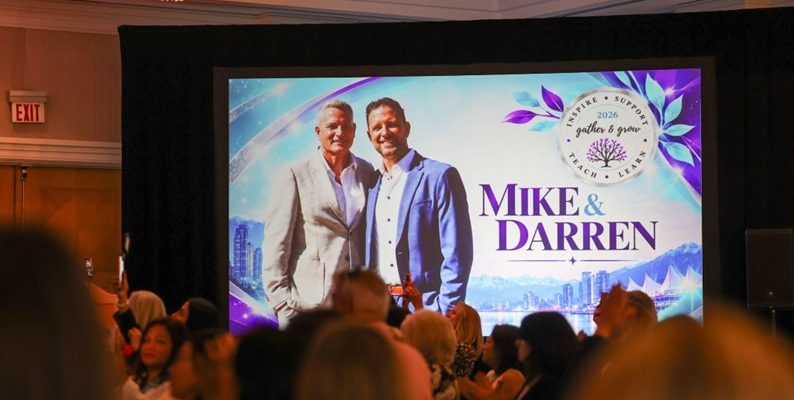
In an era when a business can be taught, supported, and grown entirely through a screen, it is fair to ask why anyone would still travel to meet in person. For the Dream Team, the online business community led by Darren Ewert and Mike Dreher, the answer was on display on September 19, when the group held its Dream Team BC Gather and Grow in Vancouver. About 500 people attended in person, and roughly 500 more joined virtually, bringing the total audience to about 1,000.
A Community That Began Online
The Dream Team is digital by design. Darren and Mike started a Facebook group in 2016 with 30 people. By March 2026, they said in an interview on the Direct Selling Accelerator podcast, the group had grown to about 276,000 members, and roughly 3,000 people were attending the weekly live training. They describe their approach as online network marketing, with the work done through social media and content rather than face-to-face meetings.
That history is what makes the Gather and Grow events worth a closer look. A community built entirely online has no practical need for a conference room. Yet the Dream Team has made in-person gatherings a regular part of its calendar. In 2026 alone, Darren and Mike appeared as guest speakers at a Gather and Grow in Ireland and the UK in May, where about 500 team members attended, many of them from Europe. A Florida Gather and Grow followed in late June with about 500 team members, mostly from the United States, and speakers from around the world who are all community leaders. Vancouver came in September.
Three Reasons To Meet In Person
Three themes run through how the Dream Team describes its work, and each helps explain why a digital-first group would invest in live events: mentorship, leadership development, and community.
Mentorship comes first. In the Dream Team, the person who introduces a new member is called a mentor, not a sponsor, and the job is to guide rather than to do the work for someone else. Guidance of that kind is easier to give and to receive when mentor and member have met. A conversation over coffee can do what months of messaging cannot.
Leadership development is the second reason. The Florida event, for example, featured speakers who are themselves community leaders. Putting members on stage as well as in the audience can signal that a community expects its people to grow into leadership roles, and it gives newer members a view of what that growth can look like.
Community is the third. Darren and Mike have called the work “a team sport,” and team sports are rarely played from separate rooms. Online groups can create connection at scale, but a shared event turns usernames into faces. For a group spread across many countries and time zones, a Gather and Grow is also one of the few moments when so many members are in the same place at the same time.
The official attendee program shows how those themes were built into the day. Darren and Mike opened the daytime program at 9:10 a.m. and spoke again at the evening gala. Between those appearances, sessions covered crafting your story, communicating with leads and buyers, staying grounded when the work gets hard, and growth in the Enagic and direct selling market. The day also included a group photo, a lunch break for networking, a VIP experience, a gala with dinner, a dance celebration, and more networking.
A Hybrid Model That Fits How The Community Already Works
The Vancouver event did not ask the online audience to wait on the sidelines. With about 500 people watching virtually alongside about 500 in the room, it mirrored how the community has operated from the start. Darren and Mike have said the team runs weekly trainings and daily Zoom sessions across multiple languages and time zones, so that members can take part from wherever they live.
This hybrid approach reflects a broader shift in how many organizations think about events. A live gathering is no longer the only place where learning happens. It is one part of a system that also includes recorded trainings, live online sessions, and everyday conversation in a private group. The in-person day adds depth. The online layer keeps it going the other 364 days.
What It Means For People Exploring Online Business Mentorship
For readers researching online business mentorship, the Gather and Grow format offers a few useful questions to ask of any community they are considering.
Is there real access to the people who lead it? Does the community offer a path from learning to leading? Are there ways to connect beyond a screen, as well as ways to take part from home? And is the community honest about the work involved? Darren and Mike have said consistency is the final piece of advice they give to anyone building a business online, and a live event is one more place where that message can be reinforced.
Anyone asking how to grow my business online will find plenty of tools, but tools alone rarely carry a business through a slow month. Relationships do that. A community that invests in bringing its people together, in person and online, is investing in the part of business building that technology cannot automate.
Why It Still Matters
For a business that began as a Facebook group of 30 people, the September 19 gathering in Vancouver shows how far a digital-first community can travel. It is also a reminder of why that community still makes time to meet face to face. Technology can connect people at scale, but the relationships behind a business are often built when people share a room.