
 By
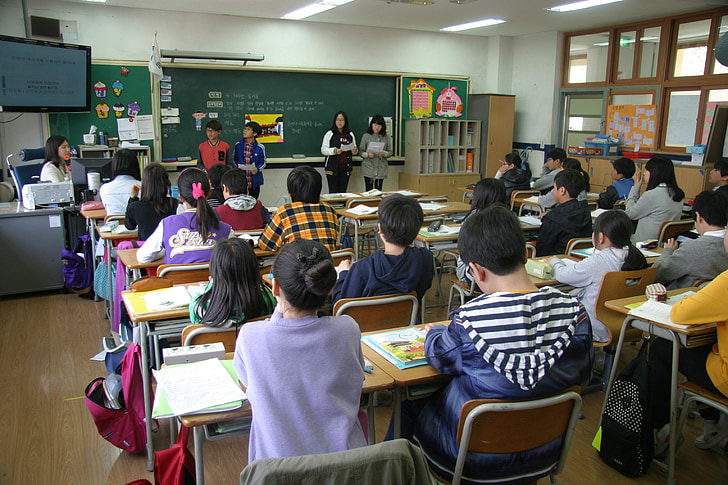
By The traditional factory-model school system was built for scalability rather than individual optimization. Established during the Industrial Revolution, this legacy framework treats students as a uniform cohort, processing them through standardized curricula, fixed schedules, and identical assessment windows based entirely on their chronological age. In this one-size-fits-all model, the classroom pace is fundamentally fixed. If a student falls behind on a specific mathematical concept, the class moves forward regardless, leaving foundational learning gaps that compound over time. Conversely, advanced students are frequently held back, forced to repeat material they have already mastered, which leads to boredom and disengagement.
Modern cognitive science and academic metrics have exposed the profound inefficiencies of this industrialized paradigm. Every human brain possesses a unique cognitive profile, shaped by distinct processing speeds, background experiences, cultural contexts, and intrinsic motivations. Personalized education addresses these realities by completely restructuring the delivery of knowledge. By centering the educational ecosystem around the unique needs, capabilities, and interests of the individual learner, personalized learning models are systematically improving student outcomes, closing persistent achievement gaps, and preparing children for an increasingly complex global economy.
Defining the Pillars of Personalized Learning
To evaluate the operational impact of this shift, it helps to clarify what personalized education looks like in practice. It is not an unguided, chaotic free-for-all, nor does it mean isolating students behind digital screens all day.
Personalized education is a data-driven pedagogical framework where the pace of instruction, the instructional approach, and the learning environment are actively tailored to the specific needs of each student. Objectives, content, and activities are dynamically adjusted based on continuous formative evaluation.
This model is built upon three distinct structural concepts:
-
Differentiation: The practice of altering the specific instructional method or content presentation to match a student’s unique learning profile, allowing varied pathways to understand the same core standard.
-
Individualization: The practice of varying the specific academic pace at which a learner moves through a curriculum, ensuring a child only advances once they have demonstrated complete mastery of the prerequisite concept.
-
Student Agency: The structural integration of voice and choice into the academic roadmap, allowing students to co-design learning objectives and connect assignments to their personal interests and career aspirations.
The Cognitive Engine: Mastery-Based Progress
The primary mechanism through which personalized education transforms student outcomes is the elimination of variable mastery. In a conventional classroom, the time dedicated to a lesson is fixed, while the level of student understanding is completely variable—some students earn an A, while others receive a C or D before the teacher moves to the next chapter.
Personalized learning completely flips this equation: the level of student mastery is held constant, while the time allowed to achieve that mastery becomes the flexible variable.
When a student struggles with a foundational concept, such as long division or sentence structure, the personalized framework pauses. The learner receives targeted interventions, alternative visual models, and customized exercises tailored to their specific blockages. They are granted multiple opportunities to demonstrate competency without academic penalty. By ensuring that a student achieves a high threshold of comprehension before moving to advanced material, personalized education completely prevents the accumulation of hidden learning deficits that cause high school dropouts and severe remediation crises.
Direct Improvements in Behavioral and Academic Outcomes
When school systems transition away from standardized instructional loops toward personalized architectures, they register profound, measurable shifts across multiple core metrics.
Significant Elevation of Academic Performance
Data from large-scale educational studies consistently shows that students engaged in personalized learning frameworks outperform their traditionally taught peers in standardized mathematics and reading assessments. These gains are particularly pronounced among historically underserved populations, English language learners, and students with diagnosed learning differences. By meeting a child precisely at their current zone of proximal development, personalized instruction eliminates the chronic cognitive overload that causes struggling students to mentally shut down.
Drastic Reductions in Chronic Absenteeism and Behavioral Disruptions
Boredom and chronic frustration are the primary drivers of negative classroom behavior and truancy. When a child is continuously subjected to lectures that are either vastly too complex or entirely too simple, they disengage. Personalized education naturally restores intrinsic motivation by incorporating student agency. When a learner can select a reading passage that aligns with their passion for marine biology or space exploration, their focus expands. Academic engagement translates directly into higher daily attendance rates and a significant drop in disciplinary referrals.
Development of Metacognitive Skills and Lifelong Self-Regulation
In a traditional environment, students are passive recipients of instruction, waiting for a bell to ring or a teacher to hand down a grade. Personalized learning environments require students to become active managers of their own intellectual development. Learners participate in tracking their own progress data, setting weekly operational goals, reflecting on their study habits, and identifying when they require external peer or teacher assistance. This process builds advanced metacognitive awareness and deep self-regulation skills that are essential for long-term survival in higher education and the modern workforce.
The Evolving Role of the Modern Educator
A common misconception is that personalized education diminishes the importance of the human teacher, replacing them with cold, algorithmic software platforms. The operational reality is exactly the opposite: personalization liberates teachers from the exhausting burden of administrative lecturing, elevating them into highly impactful clinical diagnosticians.
In a standardized classroom, a teacher spends a significant percentage of their day standing at the front of the room delivering a generalized lecture aimed at the average student, followed by hours of manual grading. In a personalized infrastructure, automated learning analytics systems handle data collection and initial content delivery.
This technological buffer allows the educator to spend their hours conducting targeted micro-lessons, leading small-group deep dives, and providing highly specific, empathetic human coaching to individual students who are navigating complex conceptual hurdles. The teacher transforms from the primary font of information into a highly focused strategist for human potential.
Implementing Personalization at Scale: A Structural Checklist
Transitioning a school district or single institution into a high-performing personalized ecosystem requires systematic changes to school culture, technological tools, and professional development models.
-
Deploy Continuous Formative Assessment Tools: Institutions must implement user-friendly diagnostic systems that provide educators with real-time, actionable insights into student mastery tracking, shifting away from high-stakes summative exams.
-
Restructure Physical Learning Spaces: Classrooms must evolve from rigid rows of desks into modular, flexible learning environments that facilitate seamless transitions between independent digital focus, peer collaboration, and direct teacher intervention.
-
Redesign Professional Development Architectures: Teachers cannot personalize learning for students if they are subjected to standardized, one-size-fits-all training. School districts must model personalization in their own teacher professional development programs.
-
Establish Transparent Mastery Dashboards: Students, parents, and educators require access to a unified, transparent data dashboard that clearly charts current competencies and next steps, rendering traditional report cards obsolete.
Frequently Asked Questions
Does personalized education require an expensive one-to-one computing device ratio for every student?
While digital access significantly helps scale personalization by automating data tracking and content path generation, personalized education is a pedagogical philosophy rather than a specific technology procurement plan. A school can implement highly effective personalization through non-digital methods, such as utilizing physical learning stations, flexible peer tutoring networks, customized project menus, and paper-based mastery trackers managed collaboratively by the student and teacher.
How does a personalized learning environment prepare students for standardized state testing requirements?
Personalized learning inherently builds deeper, more durable conceptual understanding rather than superficial, short-term memorization for a specific test date. Because students are not allowed to advance until they have thoroughly mastered core competencies, they naturally develop the complex problem-solving abilities and critical thinking skills required to successfully navigate standardized exams, typically resulting in higher proficiency scores over time.
How does personalization work for highly gifted students who quickly surpass their grade level curriculum?
For highly gifted learners, personalized frameworks act as an intellectual valve that completely removes traditional academic ceilings. Instead of waiting for their peers to catch up, gifted students can accelerate smoothly through advanced material, access high-school or college-level content while still in middle school, and engage in deeply complex, multi-disciplinary independent research projects that match their heightened cognitive capacities.
What are the main challenges teachers face when transitioning to a personalized methodology?
The primary challenge is the steep initial learning curve associated with managing a classroom where students are working on twenty different assignments simultaneously. Teachers frequently struggle with time management, learning how to interpret complex automated data arrays, and overcoming their own institutional training that conditioned them to maintain complete control over the collective classroom delivery speed.
How does personalized education support students with special needs and learning visual tracking differences?
Personalized education is naturally aligned with special education frameworks, effectively scaling the core tenets of an Individualized Education Program for all learners. The model naturally accommodates accommodations, such as variable processing speeds, multi-sensory content delivery, alternative assessment methods, and targeted speech or occupational therapies, ensuring that neurodiverse students are supported without feeling socially isolated from their peers.
Does a self-paced learning model reduce the necessary development of crucial socialization skills?
No. Personalized learning environments do not involve students sitting in isolated siloes all day. By reducing the time spent on passive, whole-class lectures, personalized models actively create large windows of time for high-impact social interaction, including cooperative project-based learning assignments, structured peer-to-peer tutoring networks, and collaborative community problem-solving challenges that mirror workplace interactions.